
Amarillo Pavement Pros: Amarillo Weather and Pavement: Freeze-Thaw, Heat and Hail
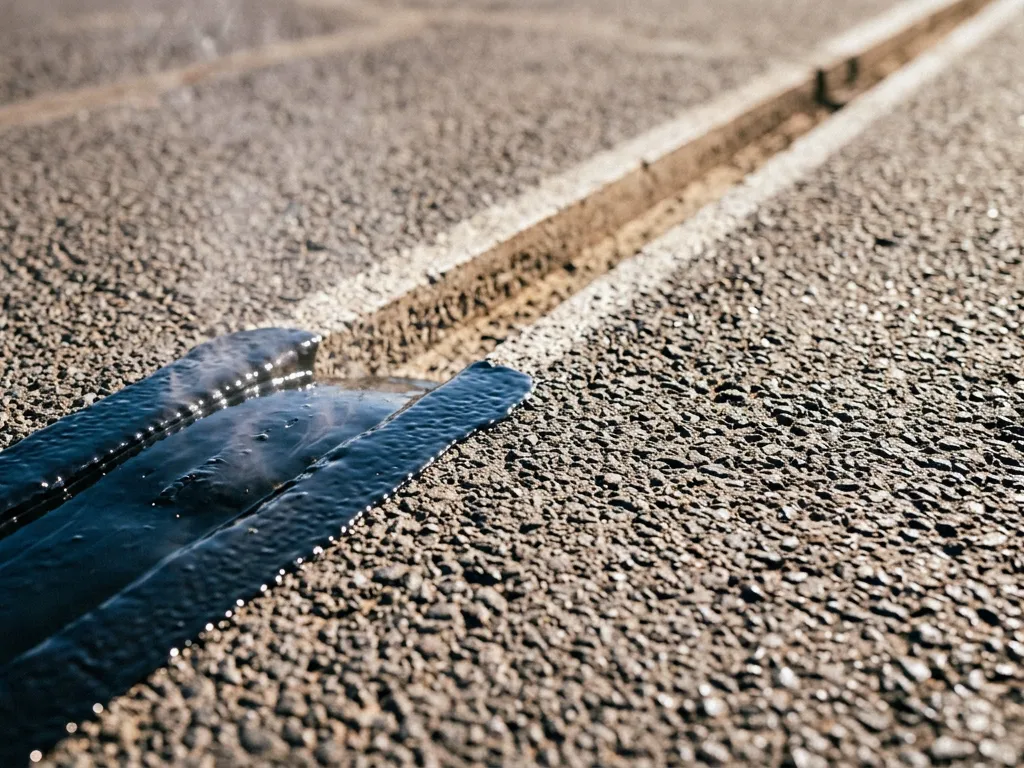
Amarillo freezes on more than a hundred nights a year and thaws on most of the afternoons that follow. That cycle, not the cold itself, is what opens pavement.
Amarillo Pavement Pros built this page from three public records: NOAA's 1991 to 2020 climate normals for the Amarillo station, NOAA's Engineering Weather Data sheet for the city, and the National Weather Service Amarillo study of severe storms in the Panhandles.
Amarillo's Weather Record at a Glance
Yearly averages. Freeze-thaw cycles and elevation come from NOAA's Engineering Weather Data (1973 to 1996 record); the rest from NOAA's 1991 to 2020 normals.
| Figure | Amarillo value | What it means for asphalt |
|---|---|---|
| Freeze-thaw cycles a year | About 85 | Ice widens open cracks |
| Days with a low at or below 32°F | 107.9 | A long freezing season |
| Days the high stays at or below 32°F | 9.1 | Most freezes thaw by afternoon |
| Days at or above 90°F | 72.4 | Binder softens |
| Days at or above 100°F | 8.9 | Fresh surfaces stay soft longer |
| Normal yearly precipitation | 19.66 in | Little rain, mostly summer storms |
| Normal yearly snowfall | 17.2 in | Meltwater in the freezing months |
| Elevation | 3,606 ft | Strong sun ages the binder |
Freeze-Thaw Is the Figure That Breaks Pavement
NOAA's Engineering Weather Data for the Amarillo station (1973 to 1996 record) averages about 85 freeze-thaw cycles a year. A cycle is a pass below freezing and back above it. Water in a crack turns to ice, expands and pushes the crack wider; when it melts, more water follows it in, and the next freeze pushes again.
The newer normals show the same pattern. Amarillo averages 107.9 days a year with a low at or below 32°F but only 9.1 when the high stays there, so most freezing days thaw by afternoon. December and January each average about 26 freezing nights. A crack left open into that season is how a lot ends up with base damage and then a pothole. Closing cracks before the first freeze is the job of crack sealing in Amarillo.
Summer Heat and Sun at 3,606 Feet
The normals put 72.4 days a year at or above 90°F and 8.9 at or above 100°F. Hot binder softens, so a fresh mat or new sealer stays tender longer on those afternoons.
Amarillo also sits at 3,606 feet of elevation, and the thinner air there oxidises asphalt binder faster than at lower elevations. Oxidised binder turns grey and brittle, and brittle asphalt cracks when the mat contracts in the cold. Parking lot sealcoating puts a fresh layer between the binder and the sun.
Rain and Snow on a Dry Plain
Normal yearly precipitation is 19.66 inches. June, July and August are the wettest months at about 2.8 to 2.9 inches each; February is the driest at 0.53 inch. Summer storms show whether a lot sheds water; water that stands for days is a parking lot drainage question.
Normal snowfall is 17.2 inches a year, with January the snowiest month at 4.0 inches. Melting snow feeds open cracks in the months with the most freezing nights.
Hail Season in the Texas and Oklahoma Panhandles
The NWS Amarillo study counted 5,849 severe hail reports, meaning hail 0.75 inch or larger, across its forecast area from 1955 to 2009: just over 68 percent of all severe weather reports there. More than 93 percent fell between May and September, with June the peak.
The largest stone in that record measured 4.75 inches, 1 mile southeast of Canyon, on May 24, 1996. For a lot owner the point is timing: storm months overlap the sealing and striping season, and sealcoat needs dry weather through its cure.
A Maintenance Calendar Read From the Record
The normals give even odds that the last spring freeze has passed by April 13 and that the first fall freeze arrives by October 27. See also the best time of year to pave.
| Period | The record | Work it suits |
|---|---|---|
| Mid April to May | Freezes ending, hail starting | Crack sealing; winter damage repairs |
| June to August | Wettest, hottest, hail peak | Paving and sealcoat between storms |
| September to October | Storms easing before the first freeze | Crack sealing again; last sealcoat |
| November to March | Most freezing nights and snow | Watch for potholes; patch failures |
Sources: NOAA National Centers for Environmental Information, U.S. Climate Normals 1991 to 2020, station USW00023047, Amarillo, Texas; NOAA Engineering Weather Data, version 1.0, Design Criteria Data sheet for Amarillo, Texas (1973 to 1996 record); National Weather Service Amarillo, The Severe Convective Storm Climatology of the Texas and Oklahoma Panhandles. Read November 2026.
Related guides: Parking Lot Resurfacing Cost in Amarillo, TX: Overlay Prices.
Plan Pavement Work Around Amarillo's Weather
Seal cracks before the freezes; sealcoat and stripe between summer storms.
Call (806) 375-4850Frequently Asked Questions
Amarillo pavement weather: Common Questions
How many freeze-thaw cycles does Amarillo get a year?
About 85 a year (NOAA Engineering Weather Data, 1973 to 1996 record).
When is the last freeze in Amarillo?
The 1991 to 2020 normals give even odds that the last 32°F night of spring has passed by April 13, and that the first fall freeze comes by October 27.
When is hail season in Amarillo?
May through September, with June the peak. That window held more than 93 percent of severe hail reports in the NWS Amarillo study.
What was the biggest hail recorded near Amarillo?
A 4.75 inch stone, 1 mile southeast of Canyon on May 24, 1996, the largest in the NWS Amarillo record for 1955 to 2009.
When should a parking lot in Amarillo be crack sealed?
Spring and fall, when cracks sit at a middling width and the surface is dry. Sealing before the first freeze keeps water out through winter.