Amarillo Pavement Pros: Chip Seal vs Asphalt: Which Fits an Amarillo Property?
Amarillo Pavement Pros compares chip seal and hot mix asphalt for property owners around Amarillo. Ask around for a cheaper alternative to paving and somebody will mention chip seal, sometimes called tar and chip. It is cheaper. It is also a different kind of thing, and the price gap only makes sense once you see what each one is doing.

Two surfaces that get quoted as if they were one
Hot mix asphalt is pavement. Stone and liquid asphalt binder are mixed hot at a plant, laid by a paver at a set thickness and rolled. The finished mat carries load.
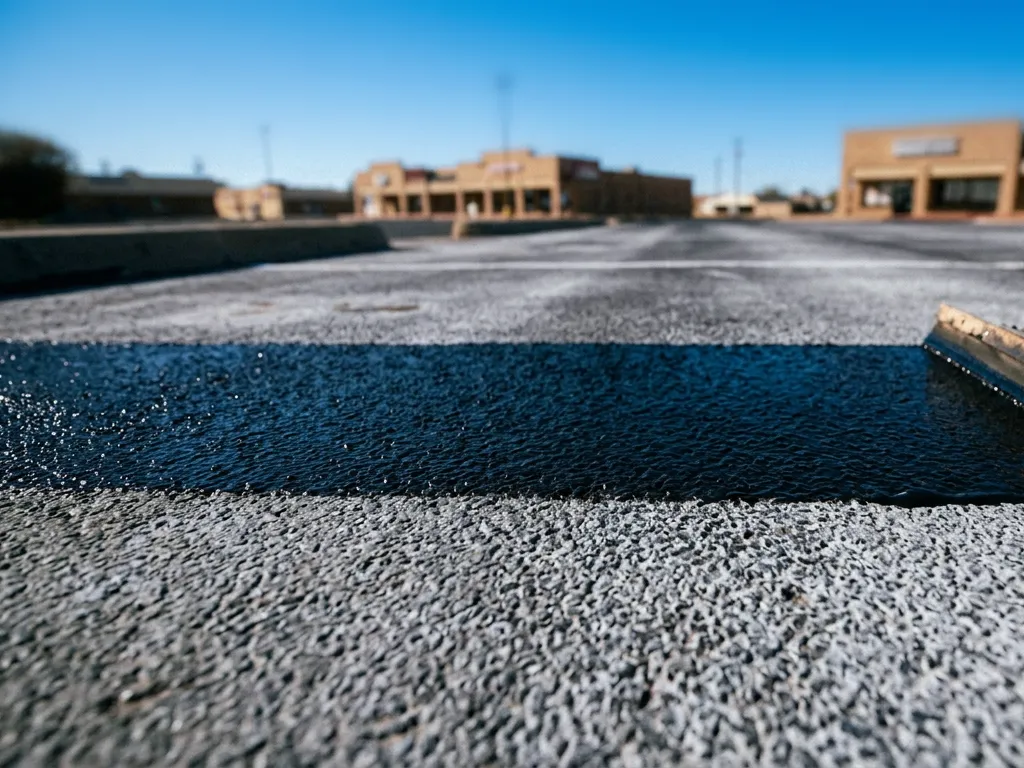
Chip seal is a surface treatment. Liquid asphalt is sprayed onto a prepared surface, a single layer of stone chips is spread over it, and the chips are rolled into the binder. The result is a stony, textured wearing surface. On Texas highways the same treatment is called a seal coat, and TxDOT publishes a whole manual on it.
Neither is the same as parking lot sealcoating, which is a thin liquid coating with no stone layer.
What TxDOT and FHWA say a seal coat can and cannot do
TxDOT has run a formal preventive maintenance program since 1987, and its Seal Coat and Surface Treatment Manual says seal coats are used extensively as a preventive maintenance technique. The manual adds that it is desirable in Texas to place seal coats on a 6 to 8 year cycle, funding permitting.
The same manual is blunt about the limit. Seal coats provide no additional structure to an existing pavement, so a structurally deficient pavement is not a candidate. FHWA's Chip Seal Checklist says the same from the federal side: chip seals should not be used on pavements with structural distress.
That one rule settles most of the chip seal versus asphalt question. Chip seal protects and renews something that already carries load. It does not create load capacity, and it does not rescue a surface that has lost it.
The Amarillo District already runs on seal coats
The TxDOT Amarillo District's 2027 to 2030 Rural Transportation Improvement Program lists a district-wide seal coat contract of $20 million in each of 2027, 2028, 2029 and 2030. District-wide projects, the document explains, cover multiple counties and roadways under one contract.
That shows chip seal is a mature treatment in this climate, not that it suits a busy retail lot: every road TxDOT seals must first be structurally sound.
What each costs
| Surface | Typical published range | Source |
|---|---|---|
| Tar and chip driveway, residential | $2 to $5 per sq ft | HomeTips, 2023 |
| New tar and chip over gravel, residential | $2 to $4 or more per sq ft | CostHelper |
| Standard asphalt driveway, residential | $3 to $6 per sq ft | HomeTips, 2023 |
| Asphalt driveway in Amarillo, residential | $3 to $6 per sq ft | HomeBlue, 2022 |
| New commercial asphalt lot | $6 to $10 per sq ft | Asphalt Repair Solutions, 2026 |
| Overlay on a structurally sound lot | $3 to $6 per sq ft | Asphalt Repair Solutions, 2026 |
The cleanest comparison is the first and third rows, one source pricing both. Chip seal on a commercial lot is quoted per lot; no cost guide publishes a figure for it. None of these is a Panhandle rate or a quote, and the ranges overlap, so choose on fit rather than price alone.
Deciding between chip seal and asphalt for a drive or lot? Call to ask what each typically costs and whether your base is a candidate for chip seal at all.
Call (806) 375-4850Where chip seal earns its place
- Long private drives and rural access roads, where the length makes hot mix expensive and the traffic is light. This is the use closest to TxDOT's own.
- Gravel drives getting a sealed surface for the first time. CostHelper describes most new tar and chip driveways as going down over a gravel base.
- Sound but ageing asphalt on low-traffic roads, as a preventive reseal before cracking lets water into the base.
What to check before chip seal is priced is set out on the chip seal in Amarillo page.
Where asphalt is the right call
- Anything new that has to carry commercial traffic. The structure has to come from somewhere, and chip seal supplies none of it. That is a job for asphalt paving in Amarillo over a properly built base.
- Pavement that has cracked through, rutted or started to pothole. That is structural distress, the exact case FHWA excludes. The answer is repair followed by an asphalt overlay, or asphalt reconstruction if the base has gone.
- A lot where the owner wants a smooth surface. Chip seal is textured by design, and no amount of rolling turns stone chips into a hot mix finish.
Freeze-thaw changes the timing, not the answer
NOAA's Engineering Weather Data for the Amarillo station (1973 to 1996 record) averages about 85 freeze-thaw cycles a year. Both surfaces fail the same basic way under that load: water gets into the structure, freezes and pries it apart. A chip seal can help by sealing a sound surface before that happens. It cannot help a surface that is already letting water into a failing base.
An Ohio example frames it the same way. A 2027 estimating guide from the Logan County engineer's office recommends a first chip seal 5 years after resurfacing, then every 5 to 8 years, and says studies show it extends pavement life 5 to 7 years. That is township road guidance from another state, but the logic matches TxDOT's: chip seal extends the life of good pavement. It does not stand in for pavement.
The same reasoning holds for property in Canyon, TX, about 15 miles south on I-27: decide whether the base is sound first, and the surface choice follows.
Questions to ask before you sign
- Is the existing surface or base sound, and how was that established? This is the question TxDOT and FHWA both make decisive.
- What binder, what stone size, and one layer or two? Two bids that differ on these are pricing different work.
- How and when will loose chips be swept up afterwards?
- What reseal interval is expected, and what is that figure based on?
Questions about a piece of ground near Amarillo? Call (806) 375-4850
Sources
- TxDOT, Seal Coat and Surface Treatment Manual: Guidelines for Treatment Selection
- FHWA-HIF-19-029, Chip Seal Checklist
- TxDOT Amarillo District, 2027 to 2030 Rural TIP, District Wide Projects
- NOAA NCEI, Engineering Weather Data: Amarillo, TX design criteria (1973 to 1996 record)
- Logan County (Ohio) Engineer's Office, 2027 General Guidance and Estimating Examples
Frequently Asked Questions
Chip Seal vs Asphalt: Which Fits an Amarillo Property?: Questions
Is chip seal the same thing as tar and chip?
Yes. Both names describe liquid asphalt sprayed down with stone chips spread over it and rolled in. TxDOT calls it a seal coat. It is not the same as sealcoating a parking lot, which is a thin liquid coating with no stone layer.
Is chip seal cheaper than asphalt?
For a driveway, usually. HomeTips (2023) puts tar and chip at $2 to $5 per sq ft and standard asphalt at $3 to $6 per sq ft. The ranges overlap, so a written quote settles it. Chip seal on a commercial lot is quoted per lot.
Can chip seal go over an old asphalt driveway?
Over sound asphalt, yes, as preventive maintenance. Over asphalt that has cracked through, rutted or started to pothole, no. TxDOT and FHWA both rule chip seal out on pavement with structural distress.
How long does a chip seal surface last?
TxDOT aims to reseal on a 6 to 8 year cycle, and an Ohio county engineer recommends 5 to 8 years between chip seals. Those are maintenance intervals, not a promised life, so ask anyone quoting a life figure where it comes from.
Is chip seal a sensible choice for a commercial parking lot?
Only where the lot already has the structure it needs, because chip seal adds none. On a new lot, or one that is failing, the load capacity has to come from asphalt or a rebuilt base.