Amarillo Pavement Pros: Caliche vs Crushed Asphalt for an Amarillo Driveway
Amarillo Pavement Pros compares caliche and crushed asphalt for drives, shop aprons and ranch lanes around Amarillo. On the edge of the city, that kind of work does not always start with hot mix, and these are the two unbound surfaces people weigh most. Both are cheaper than paving. Both rely on being spread, shaped and compacted rather than on a binder holding them together. They come from very different places, though, and that difference is the best place to start.
Caliche is the ground Amarillo stands on
The Handbook of Texas entry on the Llano Estacado describes how the caprock formed. Calcium carbonate carried in solution seeped into alluvial deposits and, through evaporation, formed a hard caprock of impervious material, commonly called caliche.
The same entry names Amarillo as one of four metropolitan areas on the plateau, along with Lubbock, Midland and Odessa.
So caliche here is not a manufactured product. It is the local geology itself, the layer the whole plateau rests on. Building a drive or lane with it is covered on the caliche road in Amarillo page.
Crushed asphalt is yesterday's pavement
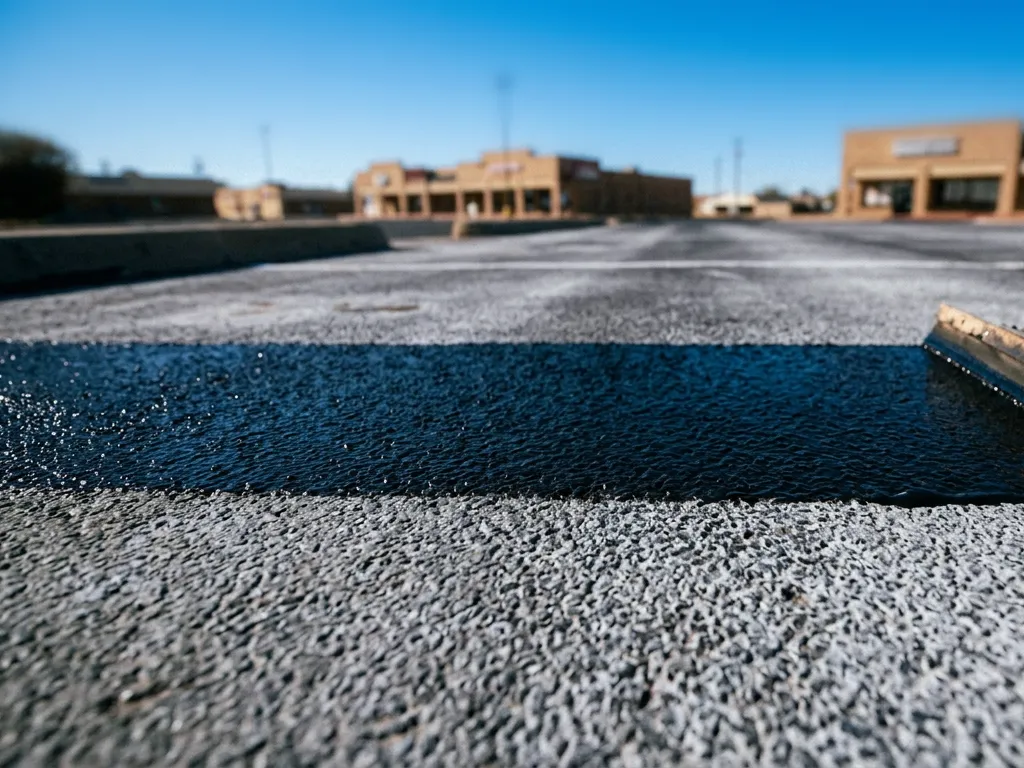
Crushed asphalt is old pavement broken back down. Most of it comes from milling, where a drum grinds the worn surface off a road or lot before new asphalt goes on, the work described on the asphalt milling page. What comes off is the same stone and binder that made up the old surface, in small pieces.
Supply depends on what a yard has on hand, and two loads both sold as millings can differ in size and cleanliness. The crushed asphalt and millings in Amarillo page covers buying it and the questions to ask before a load is delivered.
What each costs, from the guides
| Material | Range | Source |
|---|---|---|
| Caliche, per ton | $30 to $100 per ton | Fixr, 2022 |
| Caliche, installed | $2 to $7 per sq ft | Fixr, 2022 |
| Millings, picked up | $10 to $40 per ton | ThePricer, 2026 |
| Millings, delivered | $15 to $60 per ton | ThePricer, 2026 |
| Millings driveway, installed | $3 to $8 per sq ft | ThePricer, 2026 |
Read the table with three cautions. Fixr's caliche line groups caliche with Arizona gravel and dates from 2022. ThePricer's figures are current but national. And per-ton prices hide the haul: a cheap ton at a distant yard can cost more on the ground than a dearer ton nearby. None of these is a Panhandle rate or a quote.
The installed ranges overlap widely, so the quotes for your own drive decide it.
Pricing a caliche or millings drive? Call to ask what each typically costs per ton and installed, and what the City needs at the street.
Call (806) 375-4850The claim to leave out of the decision
One claim follows millings everywhere: that they soften in summer heat and re-bond into something close to pavement. It should not be the reason you choose millings over caliche, and anyone who promises it should be able to say how they know.
Water decides how long either one lasts
NOAA's Engineering Weather Data for the Amarillo station (1973 to 1996 record) averages about 85 freeze-thaw cycles a year. Neither caliche nor millings is sealed the way hot mix is. Water that stands in a rut soaks in, freezes, and loosens the surface around it.
That makes the build more important than the material. A badly shaped drive of either material will hold water in the same places every time it rains, and the freeze that follows does not care which of the two it is working on. Whichever you choose:
- Give it fall. A crown or a cross slope sends water off the surface instead of into it.
- Keep it out of the lowest ground where you can. A drive laid in the path of runoff carries that runoff.
- Define the edges. Unbound material that is not contained gets pushed sideways and thins at the margins.
- Compact it in lifts, not as one deep loose layer.
Permits inside Amarillo city limits
Amarillo Building Safety's list of work needing no permit includes driveways located within private property lot lines, excluding the approach. The approach is where a drive meets the street, and it is not covered by that exemption. The City's Building Safety fee schedule lists a Driveway / Sidewalk Permit at $144, and the Right of Way Division takes all permit applications through its eBuilder system.
So a caliche or millings drive that stays inside your lot lines is usually a private matter, and one that changes the connection to the street is not. Property in Canyon, TX, about 15 miles south, sits under its own city rules rather than Amarillo's, and county property under the county's, so check there before any work at the road edge.
When neither is the right answer
If the drive carries steady traffic, sits where water collects, or needs a surface that can be swept and plowed cleanly, an unbound surface may be the wrong category altogether.
| Alternative | Typical published range | Source |
|---|---|---|
| Asphalt driveway in Amarillo, including removal of the old surface | $3 to $6 per sq ft | HomeBlue, 2022 |
| Tar and chip driveway | $2 to $5 per sq ft | HomeTips, 2023 |
Hot mix overlaps the installed millings range above; details are on the asphalt driveway paving in Amarillo page. Chip seal seals and surfaces a sound base rather than replacing it, as the chip seal page explains.
What to ask before a load arrives
- Is the price per ton or per cubic yard, and does it include delivery?
- How deep will it be laid, and how many tons does that come to?
- Will it be graded and rolled, or tipped and spread?
- Where will the water go once it is down?
- For millings: can I see the material first, and has it been screened?
Questions about a piece of ground near Amarillo? Call (806) 375-4850
Frequently Asked Questions
Caliche vs Crushed Asphalt for an Amarillo Driveway: Questions
Which is cheaper, caliche or crushed asphalt?
On the guides, millings start lower per ton. ThePricer (2026) gives $10 to $40 per ton picked up, and Fixr (2022) gives caliche at $30 to $100 per ton. The years and sources differ, so compare two delivered quotes for the same depth before deciding.
Where does the caliche around Amarillo come from?
From the ground the city stands on. The Handbook of Texas describes caliche as the hard caprock of the Llano Estacado, formed as calcium carbonate carried in water settled into older deposits and hardened as the water evaporated.
Does crushed asphalt set hard in the summer heat?
That is said often, but it is not something to buy on. Ask anyone who makes the promise how they know, and buy on what can be shown.
Do I need a permit for a caliche or millings driveway in Amarillo?
Amarillo Building Safety lists driveways within private lot lines as work needing no permit, excluding the approach. Work at the street is a different matter, and the City lists a Driveway / Sidewalk Permit at $144. Canyon and county property follow their own rules.
Can crushed asphalt go on top of an old caliche drive?
Sometimes. It depends on whether the drive underneath is firm, sheds water and is out of the low ground. A soft or rutted drive passes its problems up into whatever goes on top, so ask for the base to be checked before anything is spread over it.
How do I make a caliche or millings drive last through the winters?
Build it to shed water. Amarillo averages about 85 freeze-thaw cycles a year (NOAA), and water standing in a rut freezes and loosens the surface. Give the drive a crown or cross slope, keep it out of low ground, define its edges and compact it in lifts.