Amarillo Pavement Pros: When Can You Drive on New Asphalt? Reopening an Amarillo Lot
Amarillo Pavement Pros wrote this guide for the question that decides how a paving job affects a business: when can the lot reopen? The answer has two clocks, a short one for traffic and a long one for curing, and on a commercial property the plan matters as much as the numbers.
The short answer, and where it comes from
One clear published schedule is We Love Paving's 2026 guide to how long asphalt takes to dry. It gives these times for new asphalt:
| Use | When |
|---|---|
| Driving cars | After a full day |
| Parking vehicles | After one to two days |
| Heavy trucks, dumpsters, equipment | After two to three days |
| Full chemical cure | Up to 30 days |
Those numbers are a sound starting point for planning. They are not a rule for your lot. The contractor who lays the mat knows its thickness and the weather since, and their release time is the one that counts.
Drying and curing are two different clocks
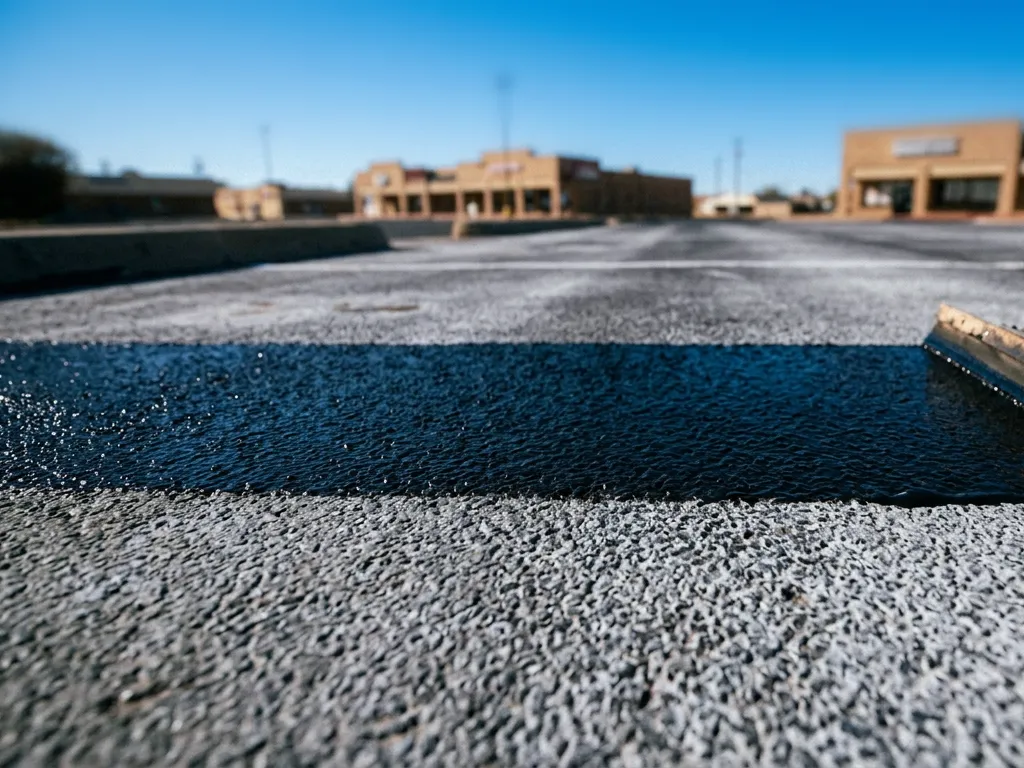
People say asphalt "dries", but nothing evaporates out of hot mix the way water leaves paint. What happens in the first day is cooling. The mat goes down hot and soft, and as it cools it stiffens enough to carry a car.
Curing is the slower process the guide calls full chemical cure, up to 30 days. Through that month the surface keeps hardening. It will carry ordinary traffic, but it is more easily marked by heavy, concentrated or twisting loads than it will be once it has cured.
That is why the schedule steps up. Cars come back first because their load is light and spread over four tyres. Parked vehicles wait a little longer because a stationary wheel presses one spot for hours. Trucks, dumpsters and equipment wait longest because their weight is high and often sits on a small footprint.
Why the published times need a local check
The guide comes from a Northern California contractor, and Amarillo is a different climate. NOAA's Engineering Weather Data for the Amarillo station (1973 to 1996 record) averages about 85 freeze-thaw cycles a year. The same record puts the station at 3,606 feet, and NOAA's 1991 to 2020 normals give the city about 72 days a year at or above 90 F, with a normal July high near 93 F.
So the practical answer is to ask the contractor three things before the job starts:
- When can cars go back on each section?
- When can trucks and the refuse hauler come back?
- What would make you change those times on the day?
Choosing the season is covered in a separate guide on the best time of year to pave around Amarillo.
Planning a commercial reopening around the schedule
On a commercial property the question is rarely "when can I drive on it" and nearly always "how do we keep the business open". The schedule turns into a plan like this:
- Pave in sections where the lot allows, so one part stays open while another cools. Ask for a phasing drawing with the order and the expected release time of each section.
- Hold back the heavy traffic. With trucks, dumpsters and equipment waiting two to three days, the refuse collection day, regular deliveries and any parked equipment need moving or rescheduling.
- Tell people early. Tenants, staff and regular drivers can plan around a closure they know about. A barrier and a sign on the day is not enough notice for a delivery already on the road.
- Keep the entrance last if you can. Paving the main approach last keeps access open for as long as possible.
Whether a section is new paving or a lift over an existing surface, the hot mix is new asphalt, so an asphalt overlay in Amarillo follows the same clock as commercial asphalt paving in Amarillo.
Planning a reopening around new paving? Describe the lot, its entrances and its delivery days, and ask for a phasing plan with a release time for each section.
Call (806) 375-4850A worked example: one lot, two sections
Take a lot paved in two halves, using the guide's times and assuming the contractor releases each section on schedule.
- Day 1. The east half is paved. The west half stays open for customers.
- Day 2. After a full day, cars can drive on the east half, and the west half is paved.
- Day 3. Parking opens on the east half. Cars can drive on the west half.
- Days 3 to 5. Parking opens on the west half. Trucks and the refuse hauler return two to three days after each section was paved: the east half on day 3 or 4, the west half on day 4 or 5.
Real jobs move with the weather and the contractor's release, but a day-by-day plan shows tenants and drivers what to expect.
Patches follow the same clock
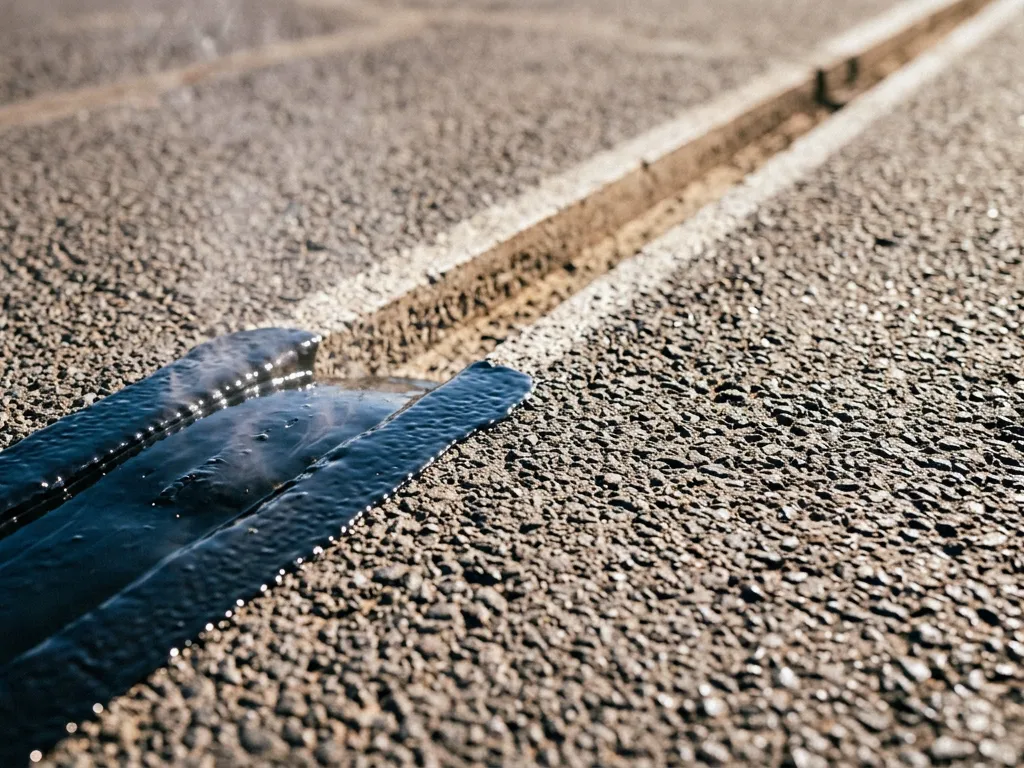
A full-depth patch or a skin patch is new hot mix too, just in a smaller area. The same release times apply, which matters most where the patch sits in a drive lane or at the dumpster pad. The parking lot repair in Amarillo page covers how patches are built.
What to keep off a new surface in its first month
- Dumpsters set down directly on the new surface.
- Trailer jacks, motorcycle stands and equipment outriggers, which concentrate weight on a very small point.
- Turning the steering wheel hard while the vehicle is stationary, which twists the surface under the tyre.
- Heavy equipment left parked in one place for days.
None of this needs a fence for a month, only people who know the surface is still new.
Striping, wheel stops and sealcoat come afterwards
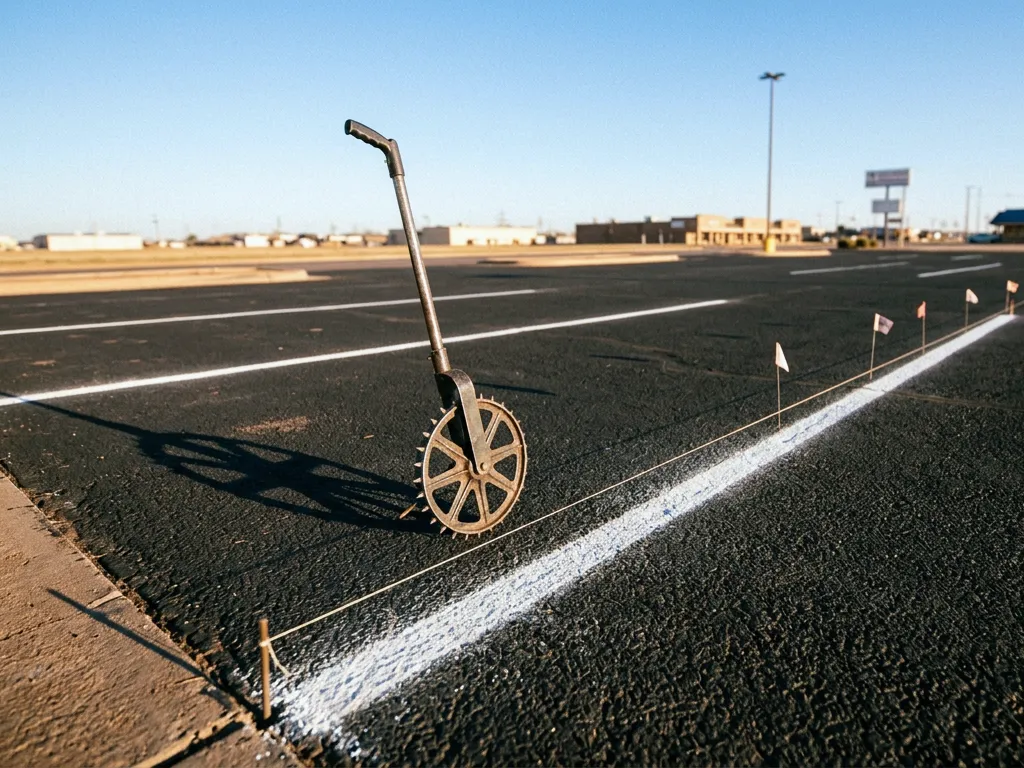
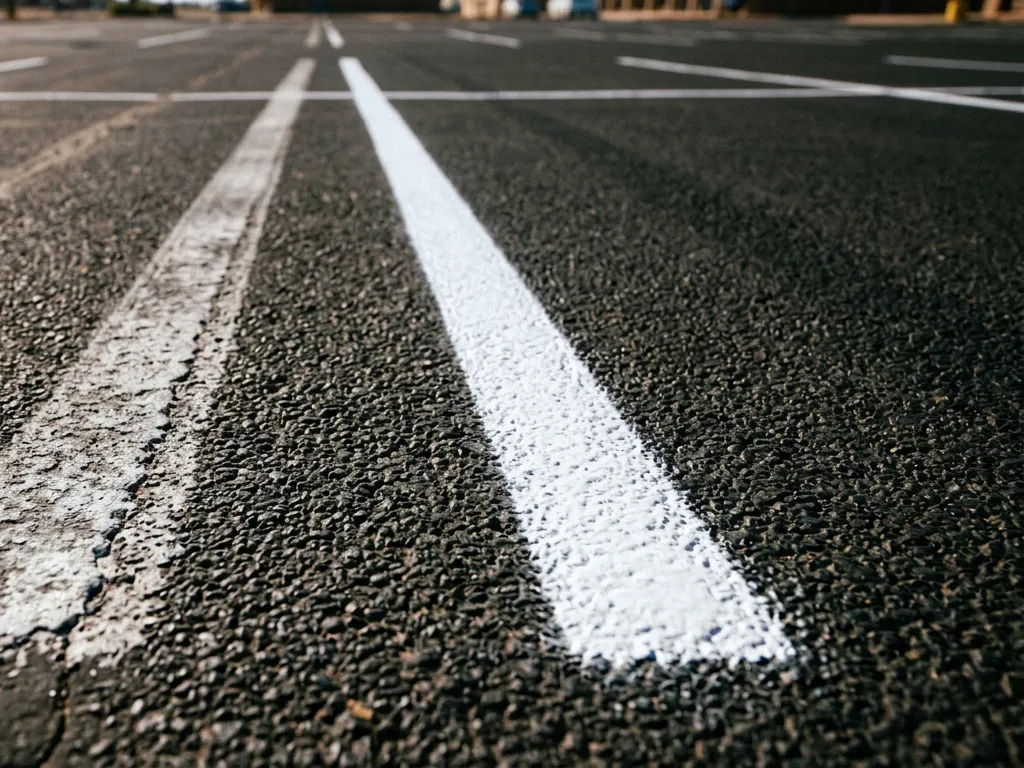
Striping. Ask when the lot will be laid out and painted, and whether temporary markings are needed in the meantime. ADA.gov's compliance brief says a business that restripes parking must provide accessible spaces as required by the 2010 ADA Standards, so a fresh surface is the moment to get accessible parking right. The parking lot striping page covers layout and paint.
Wheel stops and bollards. These are fixed into or through the new surface. Ask when the mat will be ready to take the fixings. See speed bumps and wheel stops.
Sealcoat. A new lot should not be sealed before it has cured. SealMaster recommends sealcoating typically every 3 years after that, and says freeze/thaw climates wear sealcoat faster.
The same plan works in Canyon
Lots in Canyon, TX, about 15 miles south on I-27, follow the same schedule. If a property serves weekday commuters or weekend visitors, pick the paving days around the quietest stretch, then use the reopening times above to plan the rest.
Questions about a piece of ground near Amarillo? Call (806) 375-4850
Frequently Asked Questions
When Can You Drive on New Asphalt? Reopening an Amarillo Lot: Questions
How long before I can drive on new asphalt?
We Love Paving's 2026 guide says cars can drive on it after a full day. Your own contractor sets the time for your job, because thickness and the weather on the day both matter.
When can delivery trucks and dumpsters come back?
The same guide gives two to three days for heavy trucks, dumpsters and equipment. On a commercial lot that usually means telling the refuse hauler and regular delivery drivers in advance where they can and cannot go.
Is new asphalt fully cured after a day?
No. The guide says full chemical cure takes up to 30 days. The surface can carry cars long before that, but it is still softer than it will be, so heavy, concentrated loads are best kept off it where possible.
Does Amarillo heat change the wait?
Possibly. The published times come from a Northern California contractor, and Amarillo averages about 72 days a year at or above 90 F (NOAA normals). Ask the contractor on your job whether the conditions on paving day change their schedule.
Can new asphalt be sealcoated straight away?
No. Sealcoat goes onto a surface that has finished curing, not onto fresh hot mix. Ask the paving contractor when your lot will be ready for it. After that first coat, SealMaster recommends sealcoating typically every 3 years.