Amarillo Pavement Pros: How Long Does a Parking Lot Last in Amarillo?
Amarillo Pavement Pros gives the honest answer first: a range wide enough to be frustrating. National guides put a well maintained asphalt lot at 20 to 30 years and a neglected one at less than 10. Those figures describe the same material. What moves a lot from one end to the other is what happens to it between the day it is paved and the day it fails, and Amarillo winters make that gap wider.
A range of 10 to 30 years, and why it is so wide
We Love Paving's 2026 guide to asphalt maintenance says a well maintained asphalt surface can last 20 to 30 years, and a neglected lot can last less than 10. Wright Construction (2026) gives the same 20 to 30 years for a full replacement. Both are national figures from cost guides, not measurements of Amarillo lots.
The difference between a lot that lasts a decade and one that lasts three is almost entirely maintenance.
What 85 freeze-thaw cycles do to the clock
NOAA's Engineering Weather Data for the Amarillo station (1973 to 1996 record) averages about 85 freeze-thaw cycles a year. The same sheet puts the station at 3,606 feet. Every one of those cycles is a chance for water standing in a crack to freeze, expand and push the crack wider.
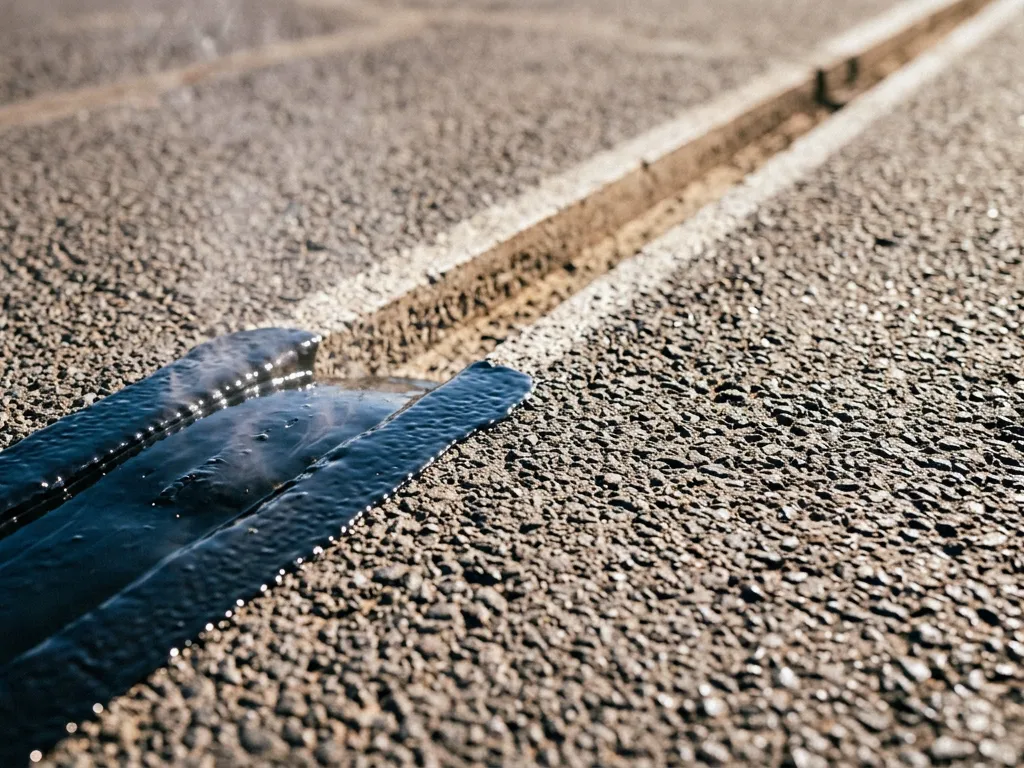
A crack admits water. Repeated freezing widens the crack and lets more in. Water that reaches the base softens it, the surface starts to flex under loads it used to carry, and the cracking spreads into the interlocking pattern the trade calls alligatoring. Potholes follow.
SealMaster says freeze/thaw regions see faster sealcoat wear, and the Asphalt Pavement Alliance says proper drainage reduces movement during freeze-thaw cycles. Neither puts a number of years on it, but the same lot needs its maintenance on time here more than in a mild climate. The Amarillo weather and pavement page sets out the local record.
The three stages of an asphalt lot's life
Stage one: sound surface, ageing binder. The lot is grey, perhaps shedding a little stone, with narrow cracks. This is the stage where cheap work does the most good. Crack sealing and sealcoating keep water out and slow the ageing.
Stage two: surface worn, base still sound. Cracking is widespread, patching has become regular, the ride is rougher, but the lot does not move under a loaded truck. This is the overlay window. National guides put a properly built overlay at 8 to 15 years with proper maintenance (Wright Construction, 2026), so taking that window resets a large part of the clock.
Stage three: base failed. Alligator cracking, potholes that reopen after patching, fines pumping up through cracks after rain, visible movement under load. The Federal Highway Administration's thin overlay checklist says the pavement under an overlay must be structurally sound, with no fatigue (alligator) cracking or potholes. No surface treatment touches this stage. The lot needs full-depth repair or asphalt reconstruction.
The longer guide to reading those signs is signs your parking lot needs resurfacing.
What each stage costs
| Work | National range | Source |
|---|---|---|
| Crack sealing | $0.75 to $3.00 per linear ft | Engineer Fix |
| Sealcoating | $0.18 to $0.35 per sq ft | We Love Paving, 2026 |
| Overlay, structurally sound lot | $3 to $6 per sq ft | Asphalt Repair Solutions, 2026 |
| Mill and overlay | $4.50 to $7.50 per sq ft | Wright Construction, 2026 |
| Full-depth reconstruction | $8 to $15 per sq ft | Wright Construction, 2026 |
On a 10,000 sq ft lot, a sealcoat at those rates is $1,800 to $3,500 and a reconstruction $80,000 to $150,000, each figure simply the rate times the area. These are national cost-guide figures, not Panhandle rates and not quotes.
The gap between those two numbers is the real answer to the lifespan question. A mill and overlay on the same lot is $45,000 to $75,000: a large bill, but it buys another 8 to 15 years on the national figure, where waiting for the base to fail turns the same lot into the reconstruction line instead.
Not sure which stage your lot is in? Describe the cracking, the standing water and how old the surface is, and hear which work fits before anyone prices it.
Call (806) 375-4850Maintenance is what buys the top of the range
The sources agree on the shape of a maintenance cycle, if not every number:
- Crack sealing every 6 to 12 months, or annually and as new cracks appear (We Love Paving, 2026). With about 85 freeze-thaw cycles a year (NOAA), it is the line in the budget worth protecting.
- Sealcoating typically every 3 years (SealMaster), sooner where freeze-thaw wear shows.
- Drainage kept working. Water that leaves the surface quickly is water that never freezes in a crack.
The Federal Highway Administration's pavement preservation guidance makes the same case for public roads: treatments built while a pavement is still in satisfactory condition can slow deterioration and extend service life. Its shorthand is "keeping good roads good".
We Love Paving (2026) puts an average preventive maintenance budget at $3,000 to $25,000 a year, depending on the property. A pavement maintenance plan in Amarillo sets that schedule out for one lot, and crack sealing in Amarillo is where it starts.
When replacement is the right call
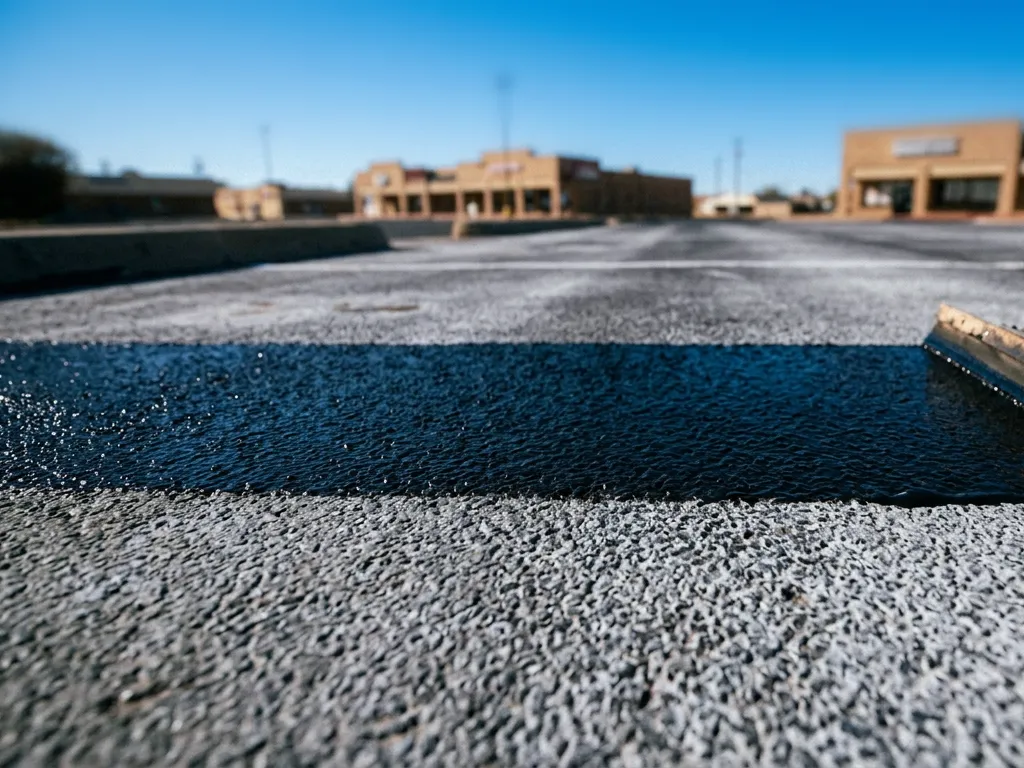
Maintenance extends life. It does not reverse a failed base. Once a lot is in stage three across a large share of its area, ask any bidder to show you why the base has failed and where. A good answer names evidence, such as cores, pumping fines, or movement under a loaded truck. If the base is sound in most places, a mix of full-depth patches and an asphalt overlay in Amarillo may still buy another 8 to 15 years for much less than a rebuild.
Tax life is not pavement life
IRS Publication 946 lists paved parking areas as land improvements, with a 15-year recovery period under the general depreciation system and 20 years under the alternative system. Those numbers set how the cost is written off, not how long the pavement lasts. Talk to a tax adviser about the schedule.
The same clock runs in Canyon
Commercial lots in Canyon, TX, about 15 miles south on I-27, sit under the same winters. The stages, the costs and the maintenance cycle above apply there just as they do in Amarillo.
Questions about a piece of ground near Amarillo? Call (806) 375-4850
Frequently Asked Questions
How Long Does a Parking Lot Last in Amarillo?: Questions
How long does an asphalt parking lot last?
National guides put a well maintained asphalt surface at 20 to 30 years and a neglected lot at less than 10 (We Love Paving, 2026). Wright Construction (2026) gives the same 20 to 30 years for full replacement. Maintenance makes most of the difference between the two ends.
How many years does an overlay add?
National guides put a properly built overlay at 8 to 15 years with proper maintenance (Wright Construction, 2026). That assumes the base underneath is sound. An overlay over a failed base inherits the failure.
Does the Amarillo climate shorten a lot's life?
It speeds up the wear that maintenance exists to stop. NOAA's Engineering Weather Data for the Amarillo station (1973 to 1996 record) averages about 85 freeze-thaw cycles a year, and SealMaster says freeze/thaw regions see faster sealcoat wear.
What does it cost to keep a lot in good shape?
National guides put crack sealing at $0.75 to $3.00 per linear ft and sealcoating at $0.18 to $0.35 per sq ft, which comes to $1,800 to $3,500 on a 10,000 sq ft lot. Reconstruction of the same lot runs $80,000 to $150,000.
Is the IRS depreciation period how long a lot lasts?
No. IRS Publication 946 gives paved parking areas, as land improvements, a 15-year recovery period. That is a tax schedule. It says nothing about when your lot will need work, and a tax adviser should confirm how it applies to you.